
Importado
CDsClássicosImportadoMúsica de CâmaraNovidades
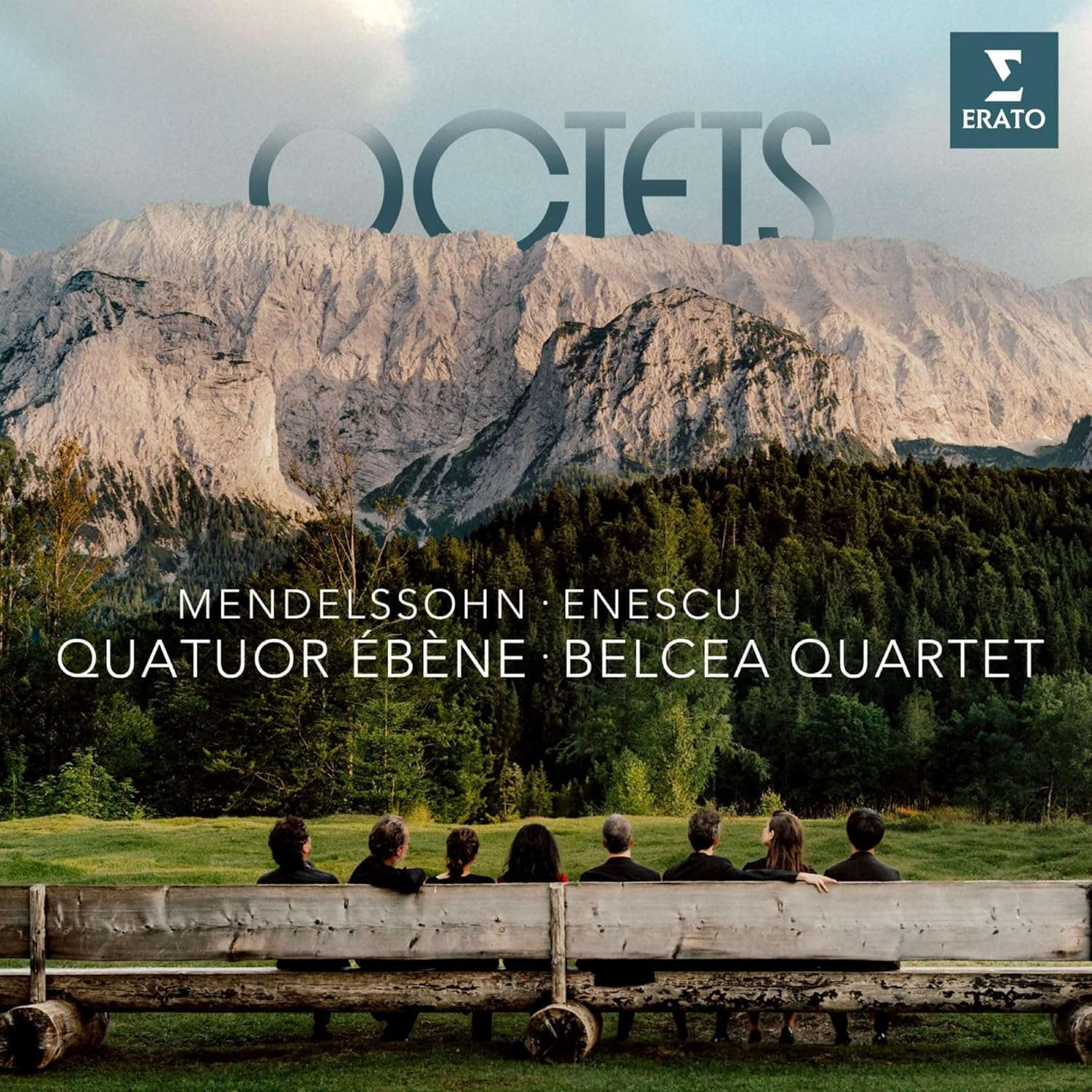
Enescu & Mendelssohn: Octets
Quatuor Ébène, Belcea Quartet
R$198,00
até 3x sem juros no cartão em pedidos
acima de R$ 400,00
Comentários
Quando dois dos maiores quartetos de cordas se unem, estamos diante de um feito nada banal. E, se eles conseguem estabelecer um contato que preserva a intimidade tão central na música de câmara, o feito é ainda maior. É o que acontece neste disco em que o Quarteto Ébène e o Quarteto Belcea se unem para interpretar octetos de Enescu e Mendelssohn. O repertório é o mesmo que os grupos apresentaram em São Paulo, em 2024. Duas obras marcantes. Mendelssohn cria um tecido musical no qual o grupo soa de forma quase orquestral em alguns momentos, com passagens mais líricas oferecendo ricos contrastes. Enescu, por sua vez, também trabalha muito com contrastes, mas assume o conjunto como uma única voz. Por isso, são peças que exigem abordagens diferentes. E os dois quartetos se mostram muito à vontade em ambas. Há, de um lado, uma precisão na forma de tocar que um crítico comparou à “de uma ponta de agulha”; de outro, a preocupação constante em não fugir das sonoridades densas que, tanto em Enescu quanto em Mendelssohn, fazem as obras soar de maneira fresca e original. O disco, assim, é uma ode a dois grandes autores e à riqueza da música de câmara que advém de intérpretes comprometidos e de excelência.
Two of the world’s leading string quartets, the Ebène and the Belcea, come together to perform octets written 75 years apart by two phenomenally gifted teenage composers, Felix Mendelssohn and George Enescu. The two ensembles, the Ebène based in Paris and the Belcea in London, first joined forces almost a decade ago and have developed their collaboration since then. When they played the Mendelssohn and Enescu octets in Philadelphia in November 2024, The Strad – an authoritative voice in the world of string music – wrote: “The phrase ‘luxury casting’ gets tossed around a lot, but seemed entirely appropriate here, as these two distinguished groups effortlessly fused their expertise – and had a blast doing it. The gutsy results had many people in the audience standing before the interval …” While Pierre Colombet, first violinist of Quatuor Ébène, takes the lead in Mendelssohn’s symphonically conceived octet, Corinna Belcea, founder of the eponymous quartet, captains the eight-person ensemble in the Enescu. Though trained in the UK, she, like George Enescu, was born in Romania. He was just 18, and living in Paris, when he wrote his octet in 1900, while Mendelssohn was even younger – a mere 16 years old – when he composed his octet in 1825 as a birthday gift for his violin teacher.
If Mendelssohn’s mastery played a defining role in music of the 19th century, Enescu, as an emblematic figure of the earlier 20th century, is remarkable for his synthesis of influences … Viennese, German and French, all imbued with the spirit of Romanian folk music. After the Ebène-Belcea ensemble’s performance of his octet at Wigmore Hall in London, Bachtrack recounted that “The final movement conjured up astonishing waves of sound, passion pouring forth from every pore, bows deployed with manic power, moments of sheer ecstasy. A quite thrilling conclusion.”
Two of the world’s leading string quartets, the Ebène and the Belcea, come together to perform octets written 75 years apart by two phenomenally gifted teenage composers, Felix Mendelssohn and George Enescu. The two ensembles, the Ebène based in Paris and the Belcea in London, first joined forces almost a decade ago and have developed their collaboration since then. When they played the Mendelssohn and Enescu octets in Philadelphia in November 2024, The Strad – an authoritative voice in the world of string music – wrote: “The phrase ‘luxury casting’ gets tossed around a lot, but seemed entirely appropriate here, as these two distinguished groups effortlessly fused their expertise – and had a blast doing it. The gutsy results had many people in the audience standing before the interval …” While Pierre Colombet, first violinist of Quatuor Ébène, takes the lead in Mendelssohn’s symphonically conceived octet, Corinna Belcea, founder of the eponymous quartet, captains the eight-person ensemble in the Enescu. Though trained in the UK, she, like George Enescu, was born in Romania. He was just 18, and living in Paris, when he wrote his octet in 1900, while Mendelssohn was even younger – a mere 16 years old – when he composed his octet in 1825 as a birthday gift for his violin teacher.
If Mendelssohn’s mastery played a defining role in music of the 19th century, Enescu, as an emblematic figure of the earlier 20th century, is remarkable for his synthesis of influences … Viennese, German and French, all imbued with the spirit of Romanian folk music. After the Ebène-Belcea ensemble’s performance of his octet at Wigmore Hall in London, Bachtrack recounted that “The final movement conjured up astonishing waves of sound, passion pouring forth from every pore, bows deployed with manic power, moments of sheer ecstasy. A quite thrilling conclusion.”
Detalhes / Referência
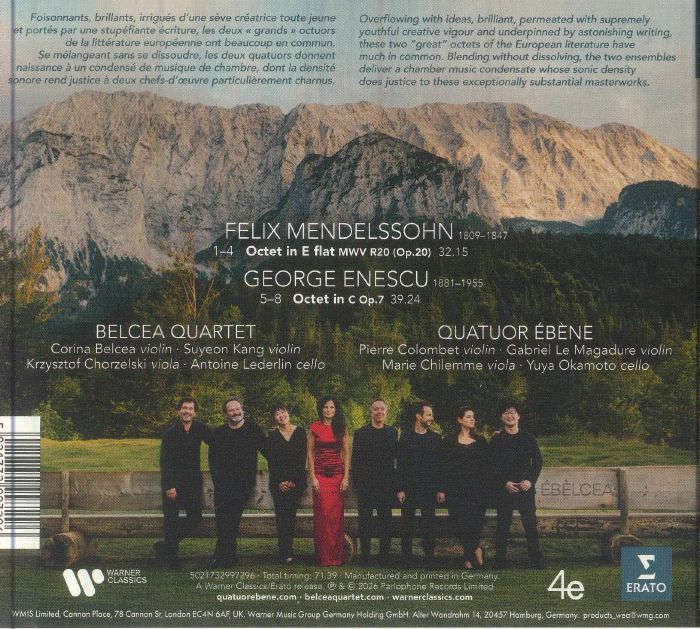
Mendelssohn: Octet in E flat major, Op. 20
Enescu: Octet in C major Op. 7
Quatuor Ébène, Belcea Quartet
Enescu: Octet in C major Op. 7
Quatuor Ébène, Belcea Quartet
Ficha Técnica
| Tipo de Produto | CD |
| Selo/Editora | Erato |
| Número de Catálogo/ISBN | 5021732997296 |
| Procedência | |
| Peso do Item | |
| Data gravação | |
| Data de lançamento | 2026 |
| Video - comentário |