
Importado
CDsClássicosImportadoMúsica de CâmaraNovidades
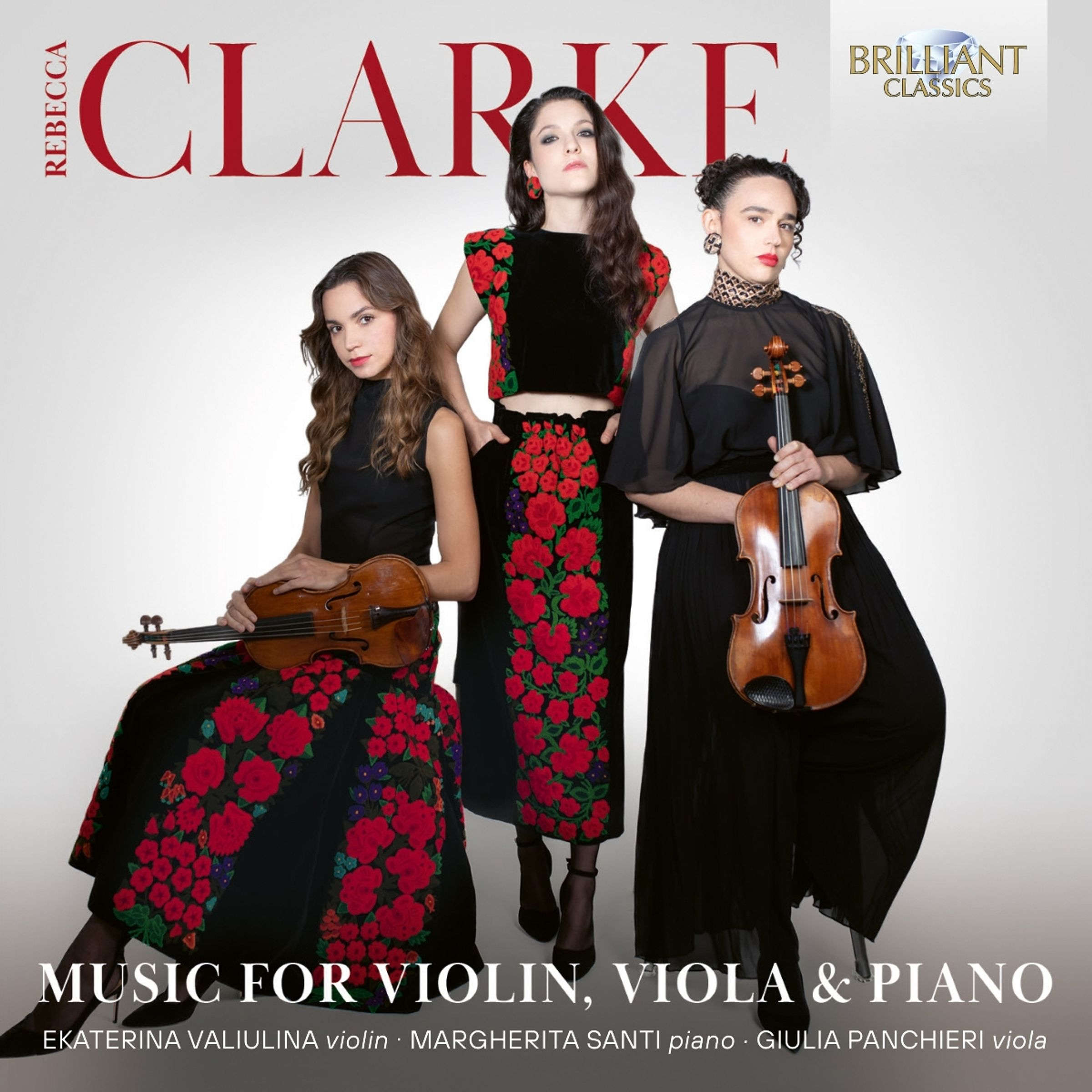
Clarke: Music for Violin, Viola & Piano
Ekaterina Valiulina, Margherita Santi
R$227,00
até 3x sem juros no cartão em pedidos
acima de R$ 400,00
Comentários
Em 1919, a compositora Rebecca Clarke (1886-1979) resolveu participar de um concurso de composição. Sob um pseudônimo, inscreveu sua Sonata para viola e piano. A peça empatou em primeiro lugar com uma obra de Ernst Bloch. Mas, quando a identidade da autora foi revelada, surgiram rumores de que Clarke não existia – só poderia ser um pseudônimo para o próprio Bloch ou algum outro compositor, uma vez que a obra não poderia ter sido escrita por uma mulher. É mais um caso na história da música de uma autora vítima de preconceito e misoginia, e que tem sua obra agora resgatada. A Sonata para viola é justamente um dos destaques do repertório selecionado pelas jovens artistas e premiadas musicistas Ekaterina Valiulina, Margherita Santi e Giulia Panchieri, que se revelam grandes cameristas na leitura de uma série de peças curtas e do ambicioso Trio Dumka, que fecha o álbum. É uma música, diz Santi, que encontra suas raízes na obra de Ravel e Franck, mas também na tradição germânica, dando origem a uma linguagem profundamente individual.
A striking portrait of Rebecca Clarke (1886-1979) through the prism of her chamber music, covering the powerful Viola Sonata as well as a diverse sequence of miniatures and tone-pictures. After decades of neglect, the music of Rebecca Clarke is now receiving its due attention, revealing her individuality as one of the most distinctive of English composers in the generation after Elgar. In her booklet essay, the pianist Margherita Santi recalls her introduction to Clarke and how it immediately sparked ‘deep admiration and wonder’: she finds the roots of Clarke’s style in the music of Franck and Ravel but also the German tradition, paying tribute to the composer’s uncompromisingly individual language.
A striking portrait of Rebecca Clarke (1886-1979) through the prism of her chamber music, covering the powerful Viola Sonata as well as a diverse sequence of miniatures and tone-pictures. After decades of neglect, the music of Rebecca Clarke is now receiving its due attention, revealing her individuality as one of the most distinctive of English composers in the generation after Elgar. In her booklet essay, the pianist Margherita Santi recalls her introduction to Clarke and how it immediately sparked ‘deep admiration and wonder’: she finds the roots of Clarke’s style in the music of Franck and Ravel but also the German tradition, paying tribute to the composer’s uncompromisingly individual language.
Detalhes / Referência
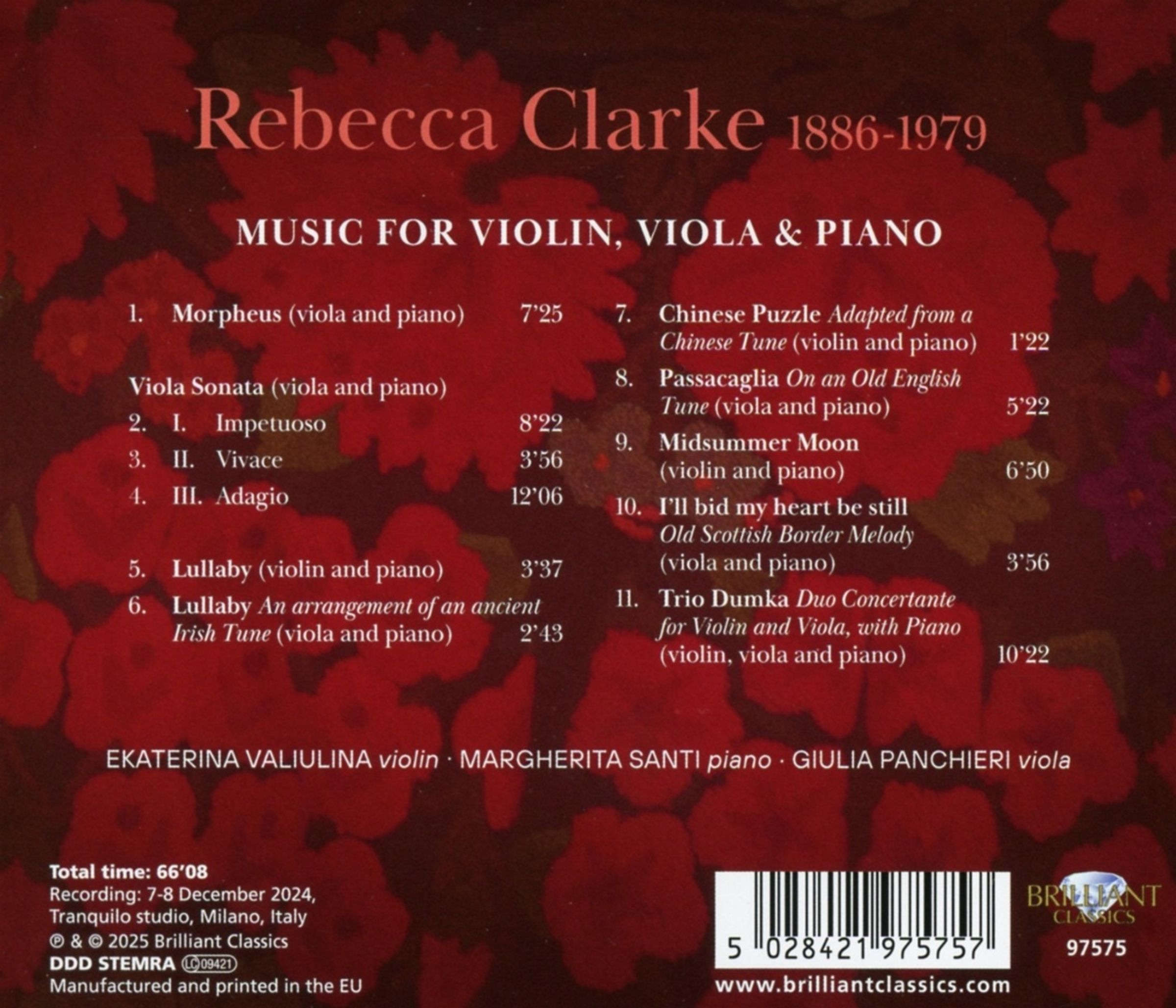
Rebecca Clarke (1886-1979)
Morpheus (Viola and Piano)
Viola Sonata (Viola and Piano)
Lullaby (Violin and Piano)
Lullaby an Arrangement of an Ancient Irish Tune (Viola and Piano)
Chinese Puzzle Adapted from a Chinese Tune (Violin and Piano)
Passacaglia on an Old English Tune (Viola and Piano)
Midsummer Moon (Violin and Piano)
I'll Bid My Heart Be Still Old Scottish Border Melody (Viola and Piano)
Trio Dumka Duo Concertante for Violin and Viola, with Piano (Violin, Viola and Piano)
Ekaterina Valiulina (violin), Margherita Santi (piano), Giulia Panchieri (viola)
Morpheus (Viola and Piano)
Viola Sonata (Viola and Piano)
Lullaby (Violin and Piano)
Lullaby an Arrangement of an Ancient Irish Tune (Viola and Piano)
Chinese Puzzle Adapted from a Chinese Tune (Violin and Piano)
Passacaglia on an Old English Tune (Viola and Piano)
Midsummer Moon (Violin and Piano)
I'll Bid My Heart Be Still Old Scottish Border Melody (Viola and Piano)
Trio Dumka Duo Concertante for Violin and Viola, with Piano (Violin, Viola and Piano)
Ekaterina Valiulina (violin), Margherita Santi (piano), Giulia Panchieri (viola)
Ficha Técnica
| Tipo de Produto | CD |
| Selo/Editora | |
| Número de Catálogo/ISBN | 5028421975757 |
| Procedência | |
| Peso do Item | |
| Data gravação | 2026 |
| Data de lançamento | 2026 |
| Video - comentário |